Song-Dynasty Origins in China
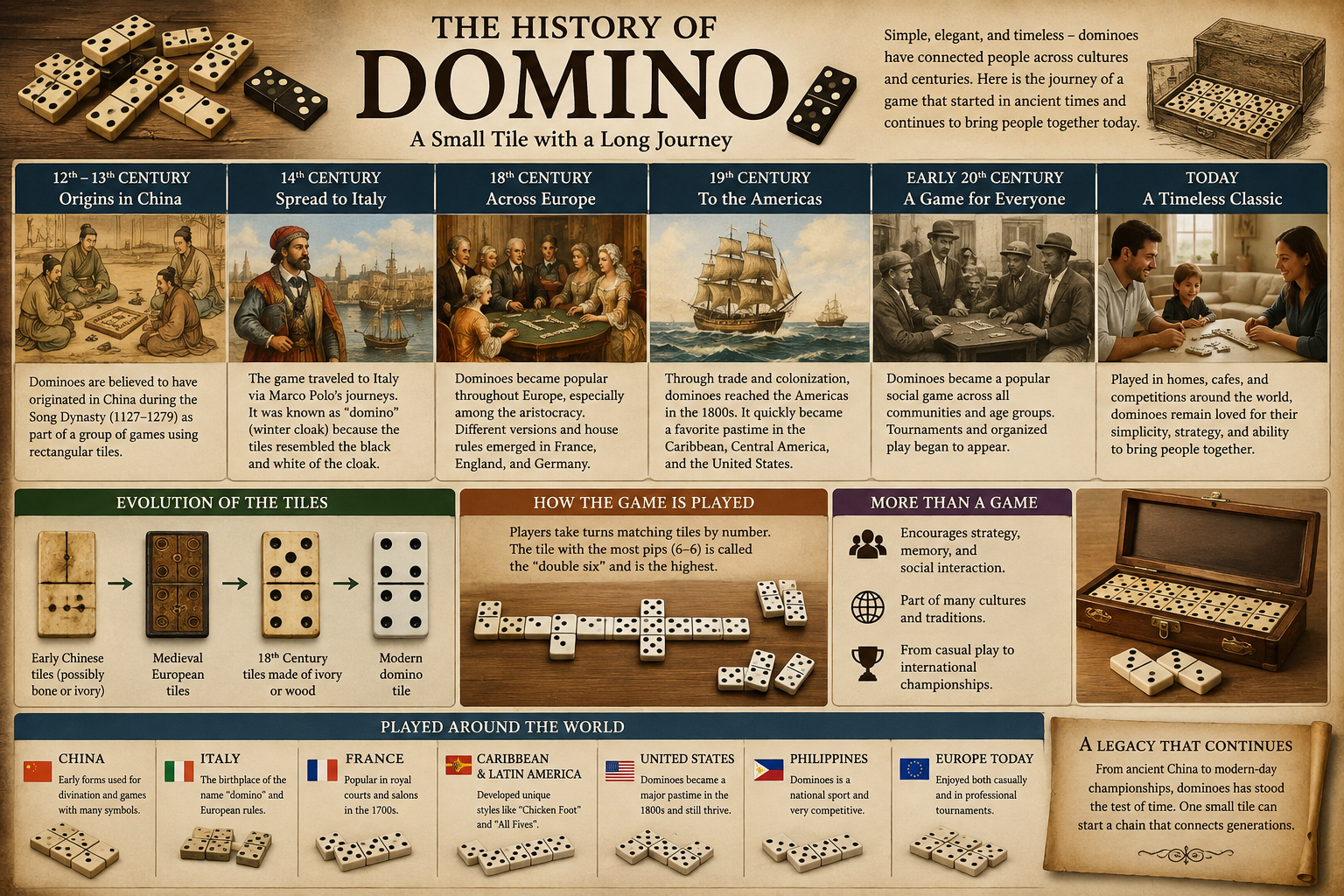
Most historians trace Domino tiles to China during or shortly after the Song dynasty (960-1279), where early references connect them to combinations derived from pairs of six-sided dice throws. Classical Chinese sets contained 32 tiles rather than the 28 in the common Western double-six set, and they were divided into civil and military suits with no blank faces. By the Ming period (1368-1644), printed manuals and artistic depictions show domino play embedded in literate urban culture, proving the game had already moved from novelty to established social pastime centuries before it reached Europe.
Arrival in Europe and Design Changes
Domino appears in European records in the 18th century, especially in Italy and France, where the tile set was redesigned into the now-familiar 0-0 through 6-6 system. European makers introduced blank halves, reducing the tile count to 28 and creating rule structures suited to trick-taking and blocking games that differed from many Chinese formats. The name domino is often linked to black-and-white hooded garments worn by French clergy or carnival attendees, a visual analogy to tile colors that helped the term spread quickly across several languages.
Industrial Production and Global Spread
During the 19th century, mechanized manufacturing and colonial trade networks pushed dominoes into mass markets across Europe, the Americas, and parts of Africa and Asia. Materials shifted from expensive ivory and ebony toward bone, brass pins, and later plastics, making sets affordable for households and cafes. By the late 1800s and early 1900s, domino clubs, newspaper puzzle columns, and rule booklets were common in many cities, and larger sets such as double-nine and double-twelve expanded gameplay into longer, more strategic scoring systems.
A Cultural Pillar in the Caribbean and Latin America
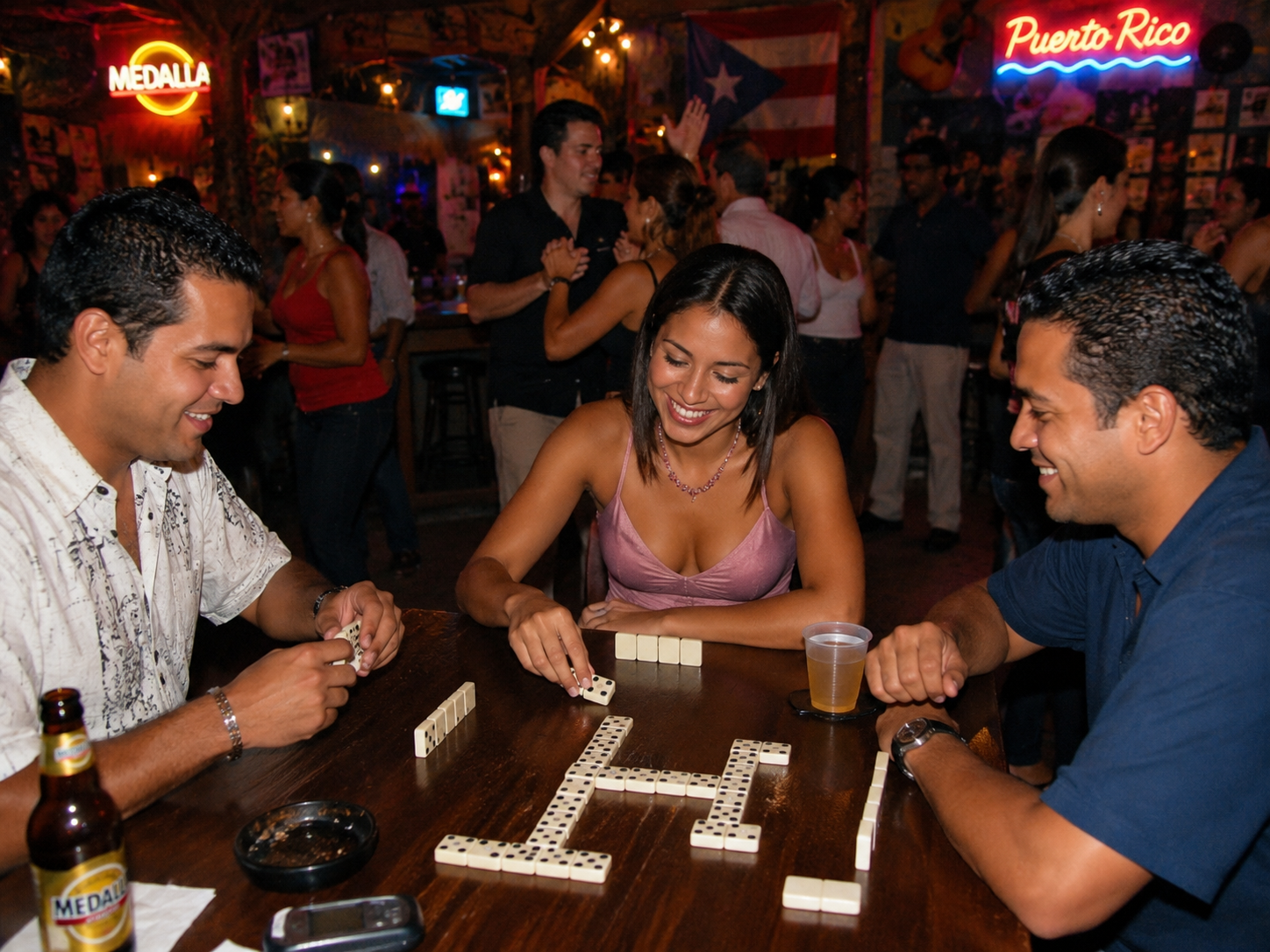
In Cuba, Puerto Rico, the Dominican Republic, Venezuela, and beyond, domino became far more than a parlor game: it evolved into a social institution played in plazas, family gatherings, and neighborhood tournaments. Regional rules such as Cuban and Puerto Rican styles emphasized partnership signaling discipline, board control, and aggressive blocking, while table etiquette and tapping rituals became part of local identity. Migration in the 20th century carried these traditions into major U.S. cities, where domino parks and community leagues preserved intergenerational play and made the game a visible marker of cultural continuity.
Modern Competition and Digital Reinvention
Today domino exists simultaneously as a household pastime, a serious mind sport, and a digital strategy platform, with national federations and international events hosting structured competition in multiple variants. Computer analysis and online matchmaking have increased strategic study, especially in endgame counting, pip management, and partnership coordination under strict no-talk rules. From Song-era tile mathematics to global esports-era apps, Domino has endured because it rewards memory, probability judgment, and human psychology in every round, proving that minimalist components can still generate extraordinary strategic depth.