Ancient Roots in the Art of Matching
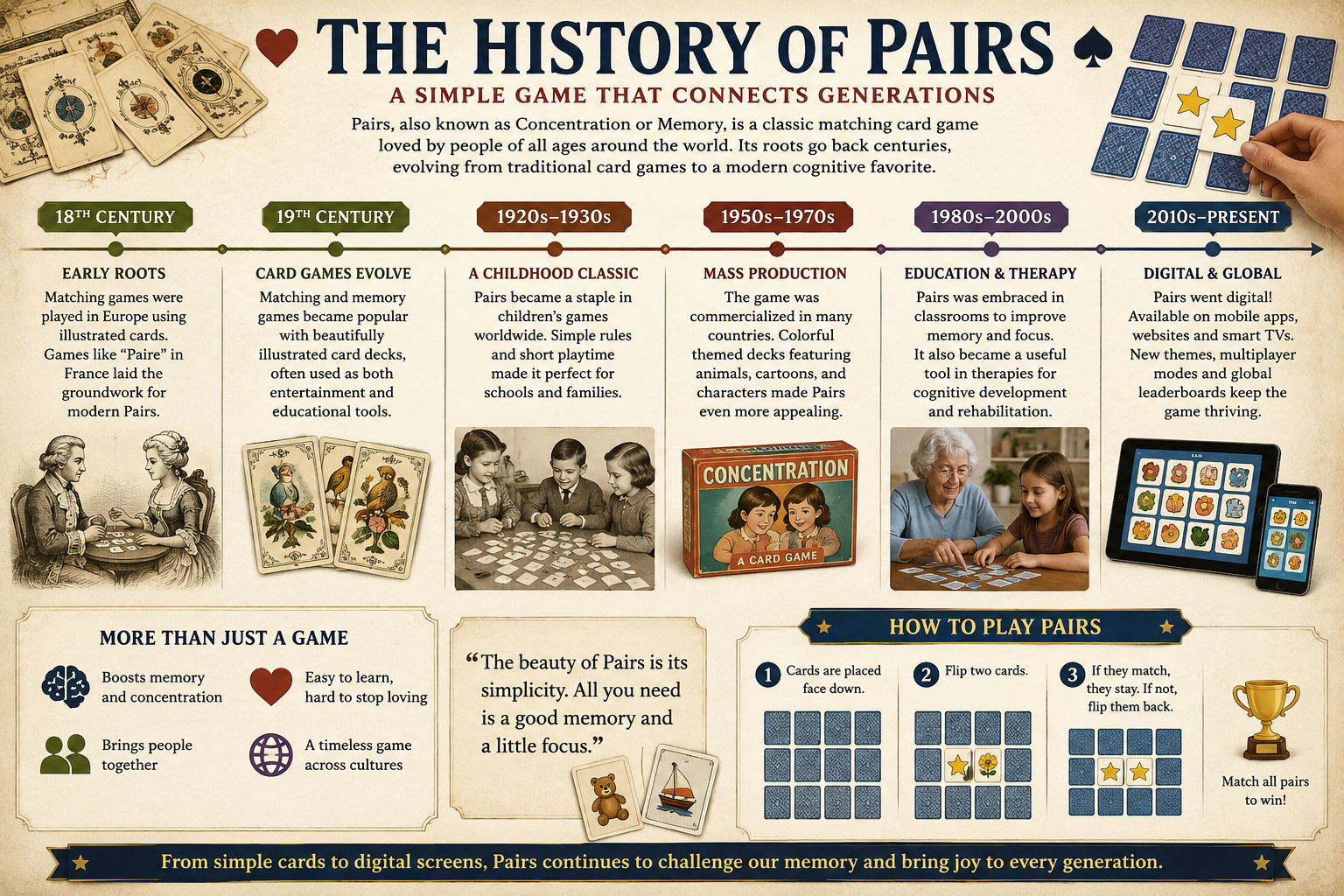
Long before printed decks and tabletop boxes, the spirit of Pairs already existed in Japan's kai-awase traditions, which flourished among aristocratic circles from the late Heian into the Kamakura era. Players matched clam shells that fit together in only one true way, many painted with poetry and courtly imagery; over time, these shell sets became both games and ceremonial objects, especially in elite weddings. The essential design of modern Pairs is already there: hidden pieces, careful recall, and the quiet triumph of finding the right partner through memory.
From Parlors to Playing Cards
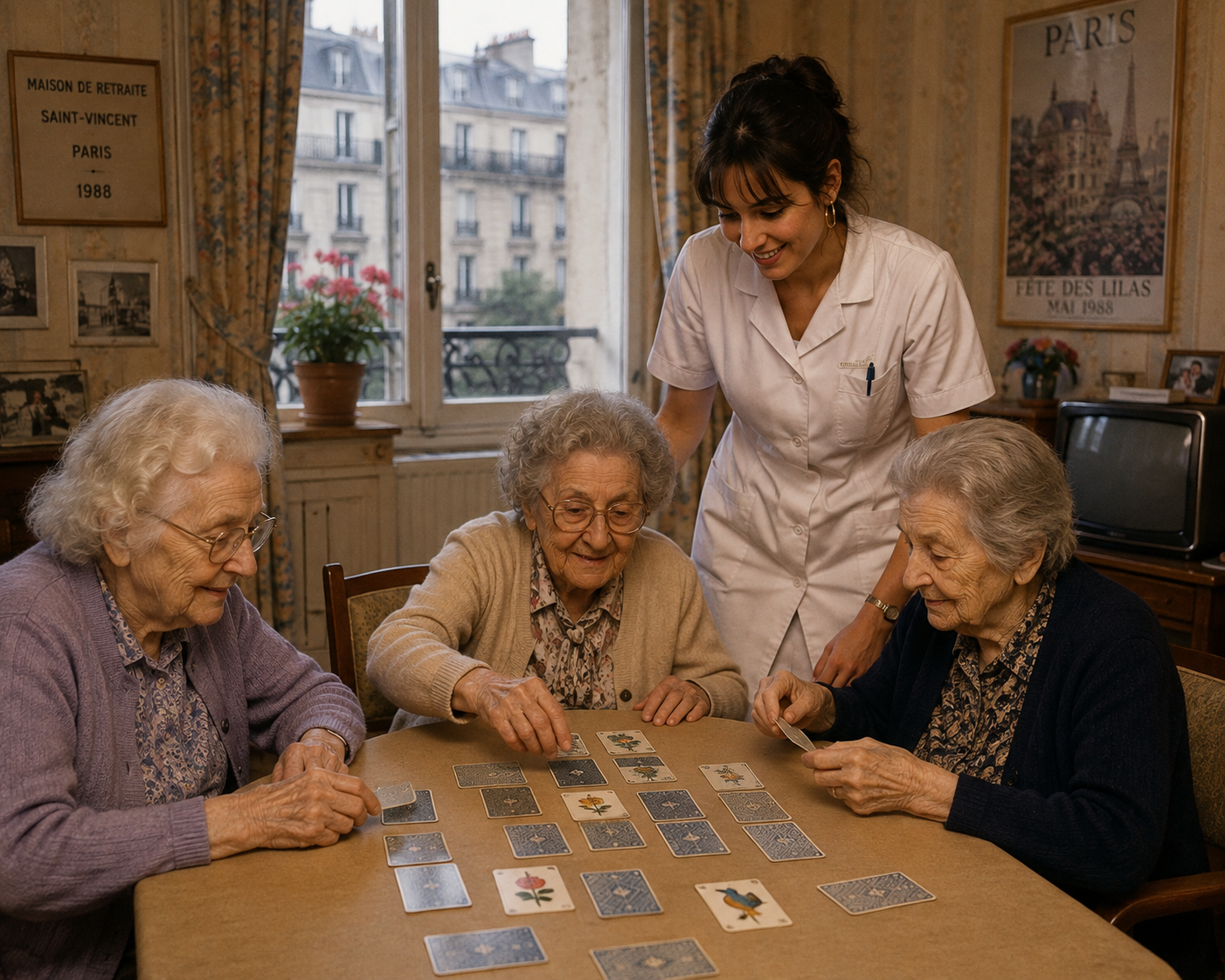
By the 19th century, Europe and North America had embraced card-based matching as a beloved household pastime: cards were laid face down, pairs were hunted by rank, and whole families could play with nothing more than a standard deck. During the Victorian puzzle boom, when parlors, magazines, and social clubs prized clever amusements, Pairs thrived because it was easy to learn, needed almost no equipment, and rewarded concentration more than chance.
The Pelmanism Era and Memory Culture
In Britain, the memory-training movement known as Pelmanism rose in the 1890s through the Pelman Institute in London, which taught systematic recall methods by correspondence. As that culture spread, "pelmanism" became a common name for matching-card play in parts of the English-speaking world, helping shift the game's reputation from simple entertainment to mental exercise. In classrooms and homes, Pairs came to symbolize attention, discipline, and cognitive sharpness, a reputation it still carries.
A 20th-Century Classic With Many Names
Across the 20th century, the same elegant format traveled worldwide under many names, including Concentration, Matching Pairs, Memory, Pexeso, and simply Pairs. Publishers issued themed sets with animals, letters, landmarks, and historical figures, turning the game into both a toy and an educational tool. In the United States, the idea even evolved into the television show Concentration, first broadcast in 1958 and revived in later decades through 1991, where contestants matched hidden items to reveal rebus puzzles before national audiences.
From Mathematics to Mobile Screens
In recent decades, Pairs has remained culturally alive while gaining scientific interest: researchers have modeled optimal play, studied expected move counts in solitaire forms, and used matching tasks to discuss probability, information, and decision-making. At the same time, computers, handheld devices, and smartphones carried the game into digital life through educational software and mobile apps with timers, hints, and adaptive difficulty. From courtly shell matching to Victorian card tables, from 1890s memory culture to modern cognitive design, Pairs endures because its rules are simple, its challenge is honest, and its beauty never fades.